We operate worldwide
Select your country or region to view the available options.
- Europe
- North America
- Asia
- Oceania
- South America
- Other
Sustainable building: the impact of microcement on a project’s CO2 footprint
Sustainable building goes beyond energy efficient solutions. The choice of materials also affects the overall environmental impact of a project. Thanks to its thin application, broad versatility and strong, seamless finish, microcement is a suitable choice for both renovation and new construction.


Why does microcement fit sustainable building?
When it comes to a sustainable floor, it is not only about appearance or the raw materials used. The amount of material required, the lifespan of the finish and the way it is applied also play an important role.
By using an existing floor or wall as the base, more of the original structure can be preserved during renovation. This reduces demolition work, lowers the amount of waste and limits the need for new materials. In this way, microcement contributes to a more efficient way of renovating.
Microcement is also suitable for a wide range of surfaces. This means one material can be used for floors, walls and furniture, creating a calm and cohesive interior.
Would you like to discover what is possible with microcement in your project? Explore our applications and get inspired.

Microcement has a mineral base and is made from carefully selected raw materials. This composition contributes to the material’s distinctive appearance and makes it possible to finish an entire surface with relatively thin layers.
When making sustainable material choices, it is important to look not only at what a product is made from, but also at how much material is required and how long the finish lasts. This combination largely determines how well a material fits within environmentally conscious construction and renovation.
Because microcement is applied in millimetre thin layers, relatively little material is needed to give a floor or wall a completely new finish. Especially when the existing substrate can be retained, this makes microcement well suited to projects where raw materials and material use are considered carefully.
The longer a floor lasts, the less often it needs to be replaced. This means fewer new materials are required over the lifetime of a home or building.
Microcement creates a strong, seamless finish that is suitable for everyday use. When applied correctly and maintained properly, the material can remain part of the interior for many years.
This is important when comparing different eco friendly flooring options. Sustainability is not determined by the production of a material alone, but also by its lifespan and how long it can ultimately be used.
Wondering which microcement finish is right for your project? Find a retailer near you.
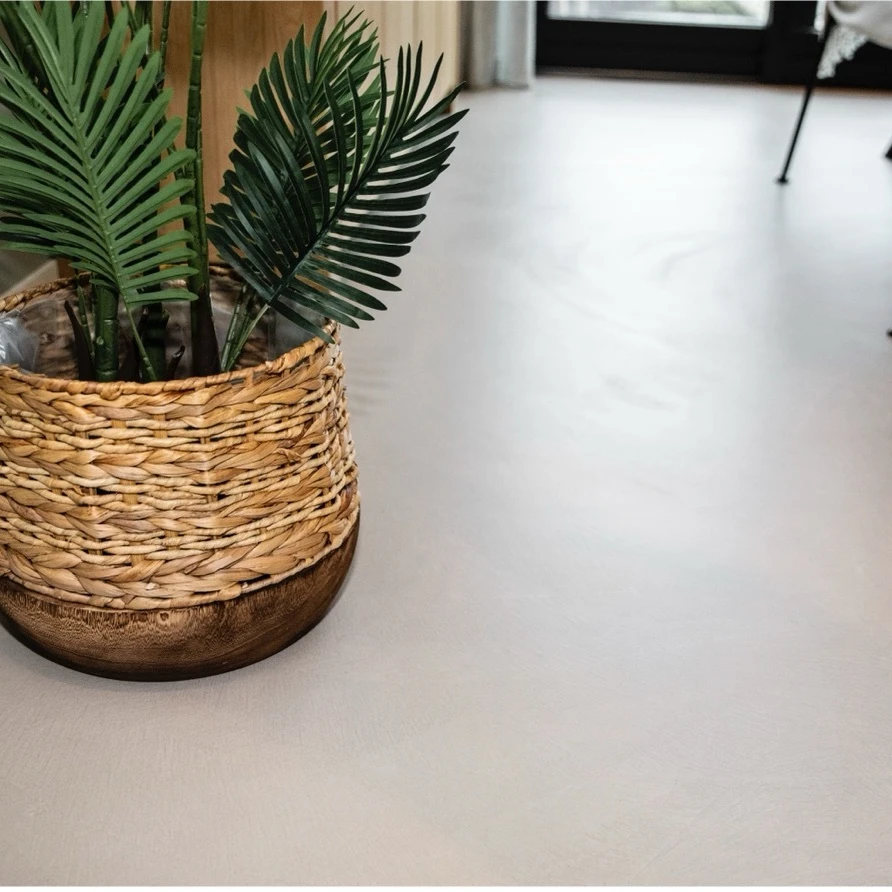
Renovation projects often generate a significant amount of waste because existing tiles, floors or wall finishes need to be removed first. When the existing surface is stable and suitable, microcement can be applied directly over it.
This means less existing material needs to be removed and disposed of. In many cases, fewer new construction materials are also required to refinish the floor or wall.
Microcement is therefore an attractive option for projects where not only the final result matters, but also the amount of waste generated during renovation. A more sustainable floor finish starts with making smart use of the existing surface.
In sustainable construction, a healthy indoor climate is just as important as environmental impact. This includes paying attention to VOCs, volatile organic compounds that can be released from building materials and affect indoor air quality.
When choosing a floor or wall finish, it is therefore important to consider not only appearance and lifespan, but also the emissions of the material. With microcement, the complete system is what matters, including primers, coatings and protective layers. Always check in advance which VOC properties apply to the selected Stone Age system.
The benefits of microcement are not limited to floors. The material can also be applied to walls, allowing you to create a calm and cohesive interior with one consistent finish. This makes microcement an attractive choice for bathrooms, kitchens and other modern interiors.
Keeping the existing substrate can also be an advantage on walls. When the surface is suitable, it does not always need to be completely removed or rebuilt. A sustainable wall finish can therefore help reduce demolition work and make more efficient use of existing materials.
Microcement also offers a great deal of freedom in terms of appearance. By using the same finish on both floors and walls, you can create a seamless look that works well with both modern and natural interior styles.
Would you like to know which applications are possible for your project? Find a specialist near you and discuss the options.
Would you like to know whether microcement is suitable for your floor, wall or renovation project? Contact Stone Age and discover which options best match your requirements and the existing substrate.